
How to Convert PDF Tables to Excel While Preserving Column Layout
A PDF file may render an aligned financial table on screen while containing no native row-and-column data structure beneath. Converting invoices, statements, or balance sheets into Excel requires reconstructing geometric coordinates followed by an audit.
No software engine can guarantee 100% error-free conversion across all files. Merged cells or scanned bitmaps demand human auditing of column alignments, decimals, and totals.
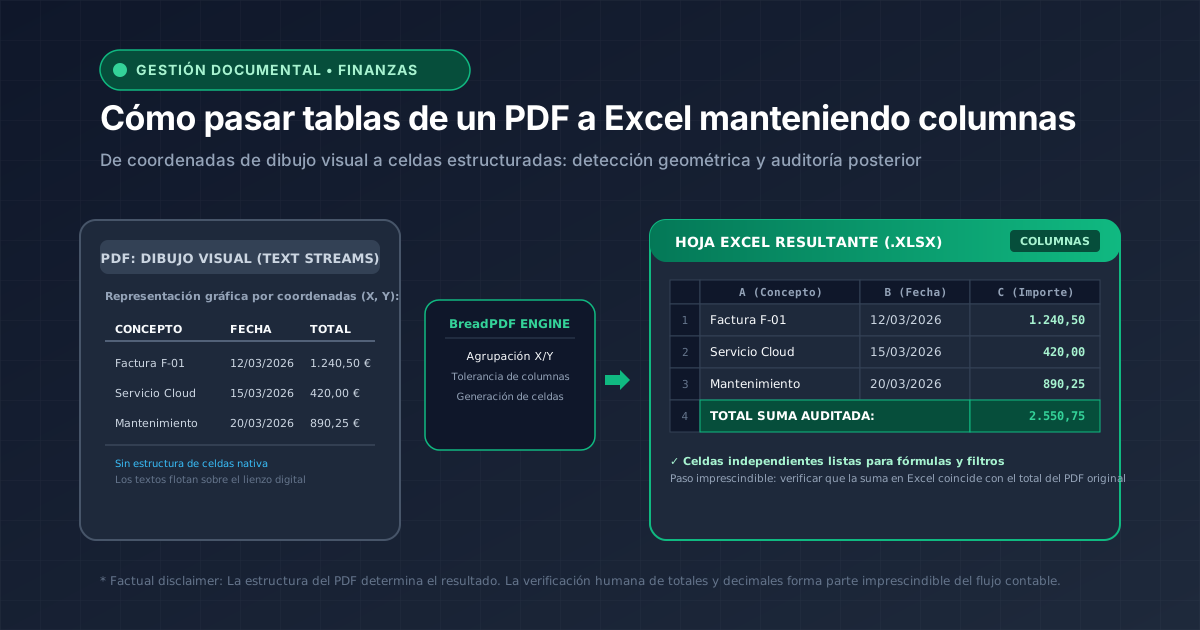

Spatial cell reconstruction executed client-side
BreadPDF clusters characters based on horizontal and vertical coordinates to generate clean XLSX workbooks without uploading financial sheets to remote servers.
Why Do PDF Tables Fail to Convert Cleanly into Excel?
To understand conversion obstacles, consider the architecture of the ISO 32000 PDF standard. Unlike an XLSX workbook that organizes content into addressed cells (Row 4, Column C), a PDF is a visual rendering canvas defined by graphic drawing instructions:
PDF Visual (Coordenades X/Y)
Textos independents col·locats en punts físics del full. No hi ha cel·les ni columnes natives.
Full Excel Estructurat (.XLSX)
Quadrícula relacional de cel·les amb tipus de dada (número, data, text) i fórmules actives.
How to Convert Your PDF Tables into Workbooks
Convert PDF to Excel (.xlsx)
The primary workflow for multi-column balance sheets or transaction logs. Clusters character streams to regenerate the grid.
Convert PDF to Excel with BreadPDF
Generate native XLSX workbooks or CSV exports processing the document directly inside your local browser memory.
Extract Structured Key Fields
When targeting discrete fields rather than layouts (totals, dates, tax IDs), the data extractor isolates structured key-value patterns.
Two-Stage Pipeline: OCR First, Then Excel
Converting flat scanned images directly produces empty sheets. Run OCR first to build text coordinates before converting to spreadsheet.